
How to Legally Set Up a Branch Office in the UAE: Understanding the Regulations and Compliance
Setting up a branch office in the UAE offers an exciting opportunity for businesses looking to expand into one of the most dynamic and business-friendly markets in the world. However, the process can be complex, especially for foreign companies unfamiliar with local regulations and compliance requirements. In this blog, we will walk you through the key legal steps and considerations you need to navigate to set up a branch office in the UAE, ensuring that your business operates within the legal framework from day one.
1. Understanding the Legal Structure for Branch Offices
Before setting up a branch office in the UAE, it’s important to understand the legal framework governing foreign businesses in the region. A branch office is essentially an extension of the parent company, allowing it to conduct business within the UAE while maintaining its original structure.
Unlike a representative office, which is restricted to promotional and marketing activities, a branch office can conduct a wide range of business activities, including sales and services. This makes it a great option for foreign companies looking to establish a stronger presence in the UAE.
There are two primary structures to consider:
-
Mainland Branch Office: This allows you to operate directly in the UAE market and engage with customers across the country.
-
Free Zone Branch Office: A branch set up within one of the UAE’s many free zones offers tax advantages, simplified procedures, and 100% foreign ownership, but it may limit you to operating within the free zone or conducting business with other companies in the zone.
To ensure compliance with UAE law, it’s essential to decide which structure aligns best with your business needs.
2. Key Legal Requirements for Setting Up a Branch Office
Setting up a branch office in the UAE involves several legal steps. Below are the key requirements to consider:
a. DED Registration
Mainland branch offices must be registered with the Department of Economic Development (DED). This includes submitting the parent company’s trade license, incorporation documents, audited financial statements, passport and visa copies of authorized signatories, and a notarized power of attorney. Free zone branches are registered with the relevant free zone authority instead.
b. Local Sponsorship Requirement
Mainland branch offices usually require a local sponsor or local service agent who is a UAE national or UAE-owned entity. The sponsor represents the branch for legal and administrative matters but does not manage operations or share profits. Free zone branches generally do not require a local sponsor and allow 100% foreign ownership.
c. Trade License and Other Permits
A branch office must obtain a trade license from the DED or the relevant free zone authority, depending on its location. The license type depends on the business activity, such as commercial or professional services. Companies must also comply with zoning rules and obtain any additional permits required for their specific industry.
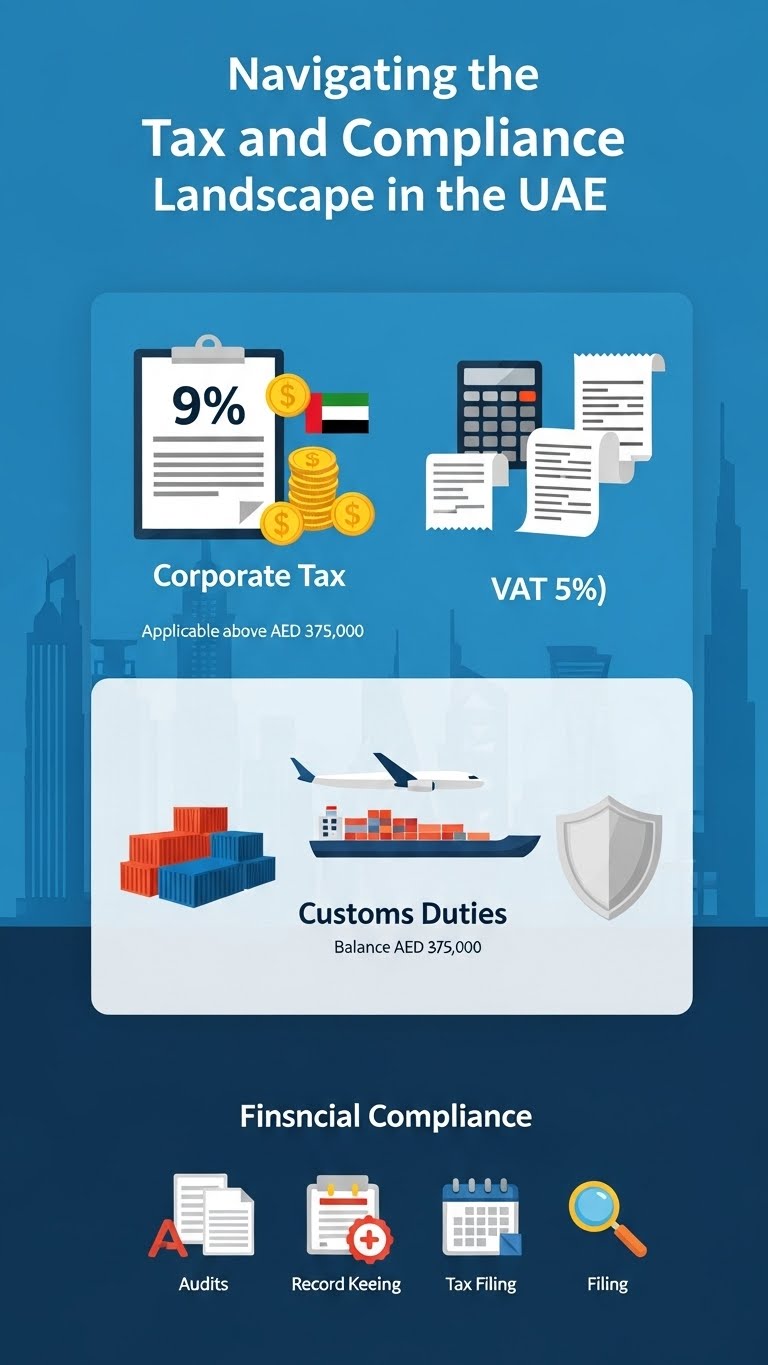
3.Navigating the Tax and Compliance Landscape
One of the main advantages of setting up a branch office in the UAE is the tax-friendly environment. While there are no corporate taxes for most sectors, recent changes such as the introduction of a Corporate Tax Law (effective from June 2023) mean that businesses must be mindful of their tax obligations.
Here are the key compliance points to consider:
-
Corporate Tax: Companies generating significant revenue (more than AED 375,000) will be subject to corporate tax at a rate of 9%. However, certain sectors, such as those in free zones, may be exempt from this tax.
-
VAT (Value Added Tax): The UAE implements a 5% VAT on goods and services, which businesses must account for in their operations.
- Customs Duties: Branch offices involved in importing goods must comply with customs regulations and pay the necessary duties on imported products.
You can learn more about the specifics of taxation in the UAE and how it compares to other regions in our detailed guide
4. Hiring Employees and Visa Requirements
When setting up a branch office, you will need to hire employees to run the operations. The UAE has strict labor laws that must be followed when employing both UAE nationals and foreign workers. For foreign employees, your branch office will need to secure work visas and residency permits.
The UAE’s labor laws cover a range of areas, from employment contracts to employee benefits, including health insurance and end-of-service gratuities. It’s important to familiarize yourself with the UAE’s labor regulations to ensure that your employee contracts are in compliance with local standards.
Additionally, companies setting up branch offices in the UAE must ensure that they adhere to the Emiratisation policy, which aims to increase the number of UAE nationals employed in the private sector.
5. Key Challenges When Setting Up a Branch Office
While the UAE offers many advantages for foreign businesses, there are some challenges to be aware of when setting up a branch office:
Regulatory Complexity:
The legal and regulatory landscape can be complex, particularly for foreign companies unfamiliar with the local system.
Cultural Differences:
Understanding and adapting to local business practices and cultural norms is essential for smooth operations
Cost of Real Estate:
Office space in prime locations such as Dubai can be expensive, and securing office space in free zones may come with its own set of challenges.
Conclusion
Setting up a branch office in the UAE can be a game-changer for foreign businesses looking to expand into a thriving market. By understanding the legal requirements, navigating the regulatory environment, and ensuring compliance with tax and labor laws, you can position your business for success in one of the most dynamic economies in the world.
As you consider setting up your branch office in the UAE, remember that the legal and regulatory landscape is critical to ensure smooth operations. We recommend working with local consultants and legal experts to guide you through the process, ensuring that every step aligns with local laws and regulations.