
What Do You Need to Open a Bank Account in Dubai? 2026 Guide
Opening a bank account in Dubai remains a key step for residents, expats, freelancers, and business owners in 2026. Whether you’re relocating to the UAE, starting a company, or managing your income locally, a UAE bank account helps you stay compliant, organized, and financially secure.
That said, Dubai bank account requirements in 2026 are stricter than in the past due to updated compliance, AML, and KYC regulations. This guide explains exactly what you need to open a bank account in Dubai, who is eligible, and how to avoid common rejection reasons.
Why Opening a Bank Account in Dubai Matters in 2026
In 2026, having a local UAE bank account is no longer optional for most people. It is required for:
- Receiving salary payments
- Paying rent, utilities, and government fees
- Managing business transactions
- Accessing online banking, debit cards, and cheques
- Maintaining financial transparency in the UAE
Most employers, free zones, and authorities now insist on a local bank account for smooth operations. At AtoZ Consultation, we help individuals and businesses in Dubai navigate banking, compliance, and corporate services with expert guidance.
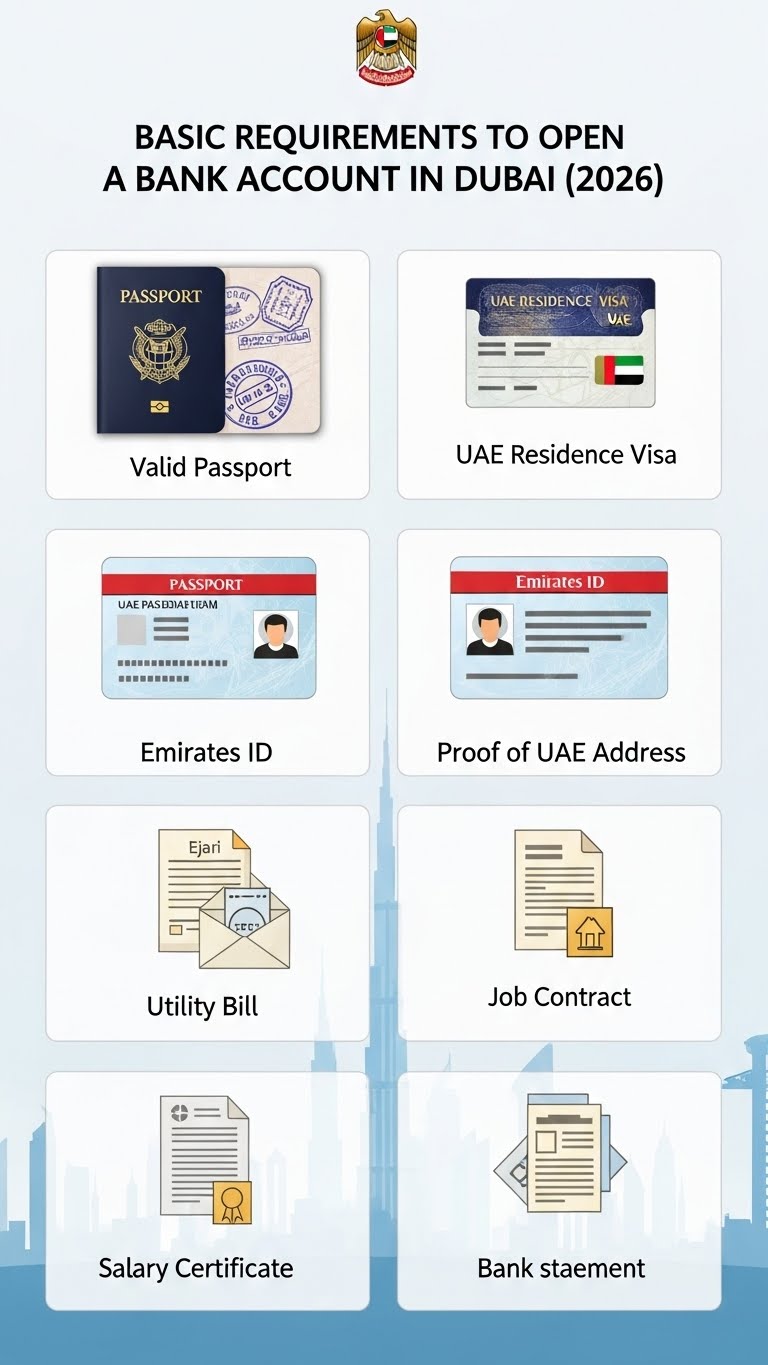
Basic Requirements to Open a Bank Account in Dubai
Although requirements vary slightly between banks, most UAE banks follow the same core checklist.
1. Valid Passport
Your passport is your primary identification document. Banks require:
- Clear passport copy
- Minimum 6 months validity
Your passport details must match your visa and Emirates ID exactly.
2. UAE Residence Visa
To open a resident bank account in Dubai, you must hold a valid UAE residence visa. As of 2026, tourist visa holders are generally limited to non-resident or savings-only options.
3. Emirates ID (Mandatory)
The Emirates ID is essential. Most banks will not activate accounts without it. Some may start the process using the Emirates ID application receipt, but final approval usually requires the physical card.
4. Proof of UAE Address
Banks may request proof of address, such as:
- Ejari (tenancy contract)
- Utility bill
- Employer accommodation letter
In 2026, banks are more flexible but still require address verification for compliance.
5. Proof of Income or Employment
To meet UAE banking compliance standards, banks may ask for:
- Salary certificate
- Employment contract
- Recent bank statement
This is especially important for salary accounts and premium banking services.
Minimum Balance Requirements (2026 Update)
Most banks in Dubai require a minimum monthly balance ranging from AED 3,000 to AED 5,000. Falling below this may result in monthly fees.
However, in 2026 many banks offer:
- Zero-balance salary accounts
- Digital banking options with lower balance requirements
Choosing the right account structure helps you avoid unnecessary charges.
Types of Bank Accounts in Dubai
Savings Account
A savings account in Dubai is ideal for individuals who want to keep their money secure while earning interest. It usually comes with a debit card, online banking, and ATM access. In 2026, many UAE banks also offer digital savings accounts with lower minimum balance requirements.
Salary Account
A salary account is opened through your employer and is used to receive monthly salary payments. These accounts often have zero or very low minimum balance requirements, making them popular among employees. Many banks also offer additional benefits like free debit cards and online banking.
Current Account
A current account is designed for professionals, freelancers, and individuals with frequent transactions. It allows higher transaction limits and cheque facilities, but usually does not offer interest. This account type is commonly used for business-related or professional income management.
Business Bank Account
A business bank account is mandatory for companies operating in Dubai and the UAE. It is used to manage company finances, receive client payments, and pay suppliers. Due to stricter compliance rules in 2026, proper documentation and accurate business details are essential for approval.
Documents Required for Business Bank Accounts in Dubai (2026)
Opening a business bank account in Dubai in 2026 involves enhanced scrutiny. Banks typically require:
- Trade license
- Certificate of incorporation
- Memorandum & Articles of Association
- Shareholder and director passport copies
- Emirates ID copies
- Company address proof
- Detailed business activity explanation
Due to stricter compliance rules introduced over recent years, approval timelines can be longer without expert assistance.

Can Non-Residents Open a Bank Account in Dubai?
Yes, non-residents can still open bank accounts in Dubai in 2026, but options are limited. Banks may request:
- Valid passport
- Proof of overseas address
- Bank reference letter
- Source of funds declaration
Non-resident accounts usually require higher minimum balances and offer fewer features. Bank account opening consultation services in Dubai play an important role in this case.
Online vs Branch Bank Account Opening in Dubai
Choosing between online and in-branch bank account opening in Dubai depends on your profile, visa status, and financial activity. In 2026, banks offer both options, but eligibility and approval chances can vary based on individual or business requirements.
Online Bank Account Opening
Online bank account opening is a convenient option for applicants with straightforward profiles, particularly salaried individuals. It allows you to begin the process digitally while meeting UAE banking compliance standards.
-
Faster processing
-
Digital document submission
-
Best for salaried individuals
In-Branch Bank Account Opening
In-branch bank account opening is more suitable for applicants with complex profiles or specific banking needs. This option allows direct interaction with bank representatives for better clarification and assessment.
-
Better for business owners and non-residents
-
Personal review by bank officers
-
Higher success rate for complex profiles
Many applicants now prefer guided assistance to avoid delays and rejections.
Common Reasons for Bank Account Rejection in Dubai
Even in 2026, applications are often rejected due to:
- Incomplete or inconsistent documents
- Unclear source of income
- Incorrect business activity selection
- Applying to the wrong bank for your profile
Professional consultation significantly increases approval chances.

Wrapping Up
Opening a bank account in Dubai in 2026 is straightforward when you understand the requirements and prepare correctly. Whether you are an employee, entrepreneur, or foreign investor, the key is choosing the right bank and submitting compliant documentation.
With increasing regulatory checks across the UAE, expert guidance can save time, reduce risk, and ensure faster approval, especially for business and non-resident accounts.